Como and Silk: The City That Dressed the World
Before fashion ever learned its name, Como already knew how to work silk. For more than two centuries this town on the lake has raised silkworms, spun, woven and printed Europe’s finest fabrics — and even today, when a great Parisian or Milanese house needs a flawless scarf or a tie with the perfect feel, that silk is often born here, in and around Como. It is a story of water, mulberry trees, skilled hands and a craft that looks a lot like cooking: patience, precision, and raw materials that allow no shortcuts. Here is how Como became Europe’s silk capital, and why its history is worth knowing while you visit the lake.
Why Como
Silk did not come to Como by chance. It needed mulberry trees to feed the worms, clean and plentiful water for spinning and dyeing, and a workforce willing to do slow, meticulous work: the Como territory had all three. Mulberry growing and silkworm rearing had spread through northern Lombardy as far back as the Renaissance, but it was between the late 1700s and especially the 1800s that Como turned this rural tradition into a true industry.
Geography helped: close to Milan, a crossroads toward Switzerland and the rest of Europe, with water power available along its rivers and streams. When Italy moved into industrialisation, Como already had looms, dyers and generations of families who lived by silk. It was not a new idea to import — it was a trade to grow.
The 1800s: from craft to silk capital
Through the nineteenth century Como concentrated an extraordinary number of spinning mills, weaving sheds and dye works. Whole valleys around the town worked for the silk district, and quality soon became the signature: not the cheapest silk, but the most carefully made. Toward the end of the century the city even gave the sector a dedicated technical silk school — a sign that here fabric was not only commerce but training, research, and the passing of knowledge from one generation to the next.
Over time, raising the worm locally declined — most of the raw fibre today comes from other countries — but Como did not lose its lead, because it shifted its value to what it did best: weaving and, above all, printing and finishing silk. That is the key to the whole story.
Weaving and printing: the real Como secret
When people speak of “Como silk” they do not mean only the thread, but the work done to it. Two skills made the town irreplaceable:
- Weaving — fine, even wefts, complex weaves, and a fabric “hand” you can recognise by touch.
- Printing — from historic screen printing to today’s digital techniques, with a depth of colour and detail that is hard to match.
- Dyeing and finishing — the step that fixes the colours and gives the cloth its brightness and durability.
- Design — studios of pattern designers and archives of motifs that have fed fashion collections for decades.
It is the sum of these steps that makes the difference. A scarf printed in Como is not just colourful: it is registered to within a millimetre, with crisp edges and gradients that survive washing and light. The same goes for ties and shawls, where the “hand” — the way the cloth runs between your fingers — is what separates a luxury piece from a cheap imitation.
The Silk Museum
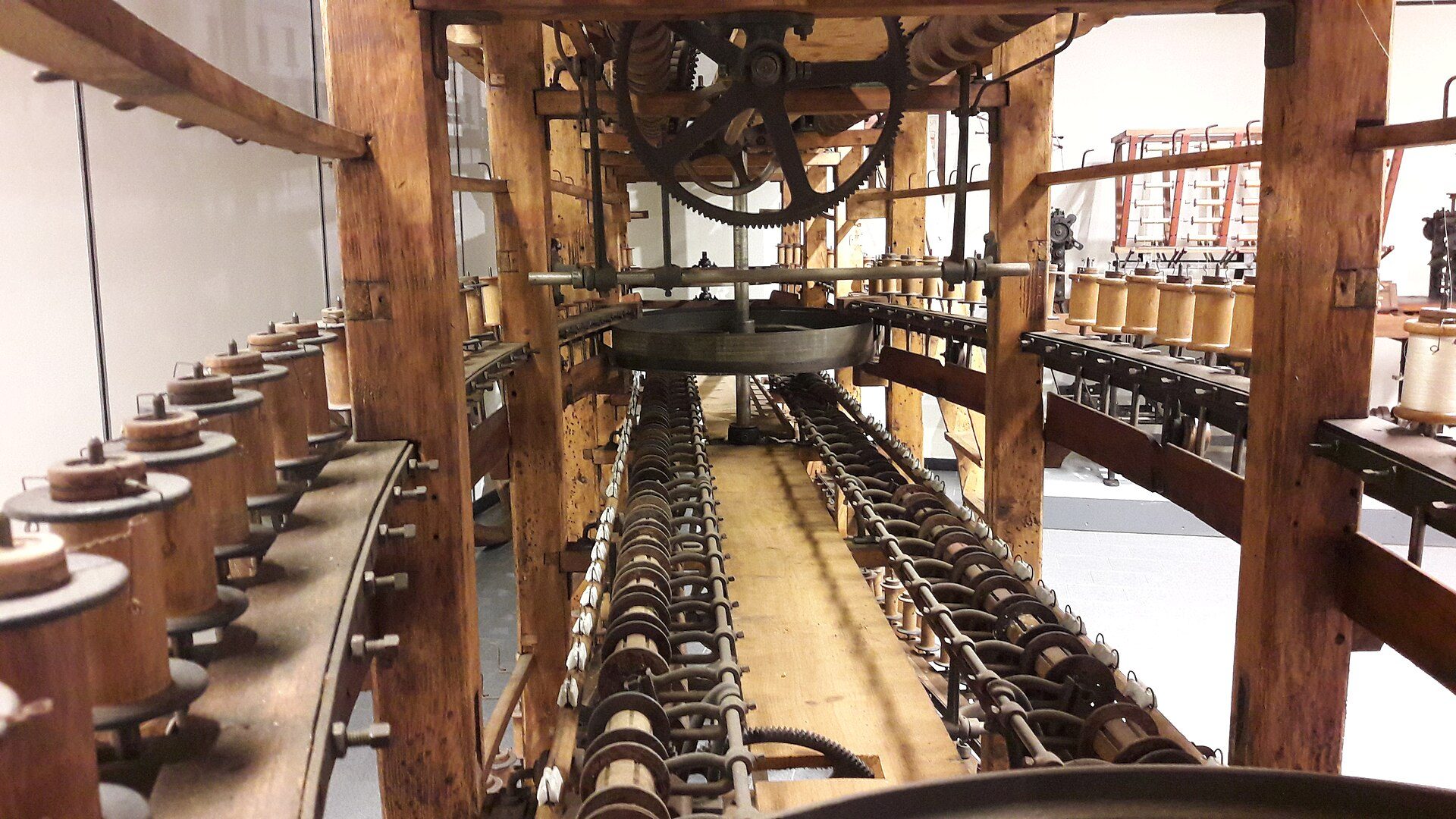
To really understand all of this, Como has a place devoted to it: the Silk Museum (Museo Didattico della Seta). It gathers original machinery, looms, dyeing and printing equipment, sample books and documents that tell the whole cycle, from worm to finished cloth. It is a hands-on, concrete museum, built around tools and gestures rather than untouchable glass cases: you see how silk was spun, how it was dyed, how it was printed.
It is a perfect visit for anyone who loves to understand how things are made — the same curiosity that brings so many people to a cooking class. For current opening hours and tickets it is always best to check the museum’s official website before you go. On a rainy day it is also an excellent indoor option: we have included it among our things to do in Como for lovers of good food and craft.
Why Como silk still dresses the world
Today the Como silk district is one of the most important in the world for silk destined for high-end fashion. Many of Europe’s best-known houses rely on local weavers and printers for scarves, ties, shawls and apparel fabrics. We will not name brands, so as not to promise what we cannot verify, but the point stands: when you read “fine Italian silk,” very often Como is behind it.
The reason is at once simple and deep: know-how. Similar machines can be bought anywhere, but the designer’s eye, the dyer’s hand, and the experience of the person who checks a print to the millimetre cannot be improvised. It is a body of skill built up over more than two centuries — exactly like hand-rolled sfoglia: the difference is not in the tool, but in the person using it.
Silk and cooking: the same Como know-how
There is a thread that ties silk to our cooking: both live on craft, patience and raw materials handled with respect. Rolling out sfoglia with a pin until it is almost translucent is not so far from checking the weave of a fabric — it takes sensitivity in the hands, attention, and time. Our chef trained at Rina Poletti’s Accademia della Sfoglia, and it is that same care for detail we try to pass on in every cooking class in Como.
A single day on the lake can tell both stories: the Silk Museum or a stroll through the centre in the morning, the stove with us in the evening. And if you want to see how it all fits together, take a look at our two-day weekend in Como.
Key takeaways
- Como has been Europe’s silk capital since the 1800s, built on mulberries, water and skilled labour.
- The real Como value is in weaving, printing and finishing the cloth, not just the thread.
- The Silk Museum tells the whole cycle, from worm to finished fabric (check hours on the official site).
- Today many great fashion houses rely on the weavers and printers of the Como district.
- Silk and sfoglia share the same know-how: patience, hands, and quality raw materials.
Live the Como craft at the table
Once you have discovered how Como dressed the world, get your own hands in the dough. Choose between the Tagliatelle Masterclass – Fresh Tomato, the Tagliatelle Masterclass – Ragù Bolognese, the Ravioloni Verdi Masterclass – Ricotta or the Farfalle e Garganelli Masterclass – Ragù. Want to know how the evening is run? Read how it works or explore our pasta school in Como.
Book a cooking class in Como
€150 per person, ~3 hours, groups of up to 12: hand-rolled pasta, a spritz lesson — you build your own Aperol or Campari spritz and enjoy it as your aperitivo — and gelato topped with a few drops of Traditional Balsamic of Modena DOP. No upfront payment.
Book a class Back to Journal