Fresh Pasta Dough: The Play-Doh Test (and Why Weather Matters)
The biggest mistake is adding all the flour at once. Egg size changes. Humidity changes. Your job is to build the dough slowly until it feels right.

Start with a well and add salt early
Make a hole in the flour and crack the eggs inside. Add salt in the hole. When you mix from the centre, salt dissolves evenly, so every tagliatella tastes the same.
Add flour little by little
Do not “decide” the final flour amount before touching the dough. Some days you need more. Some days you need less. The target is a soft dough you can work with.
The Play-Doh texture
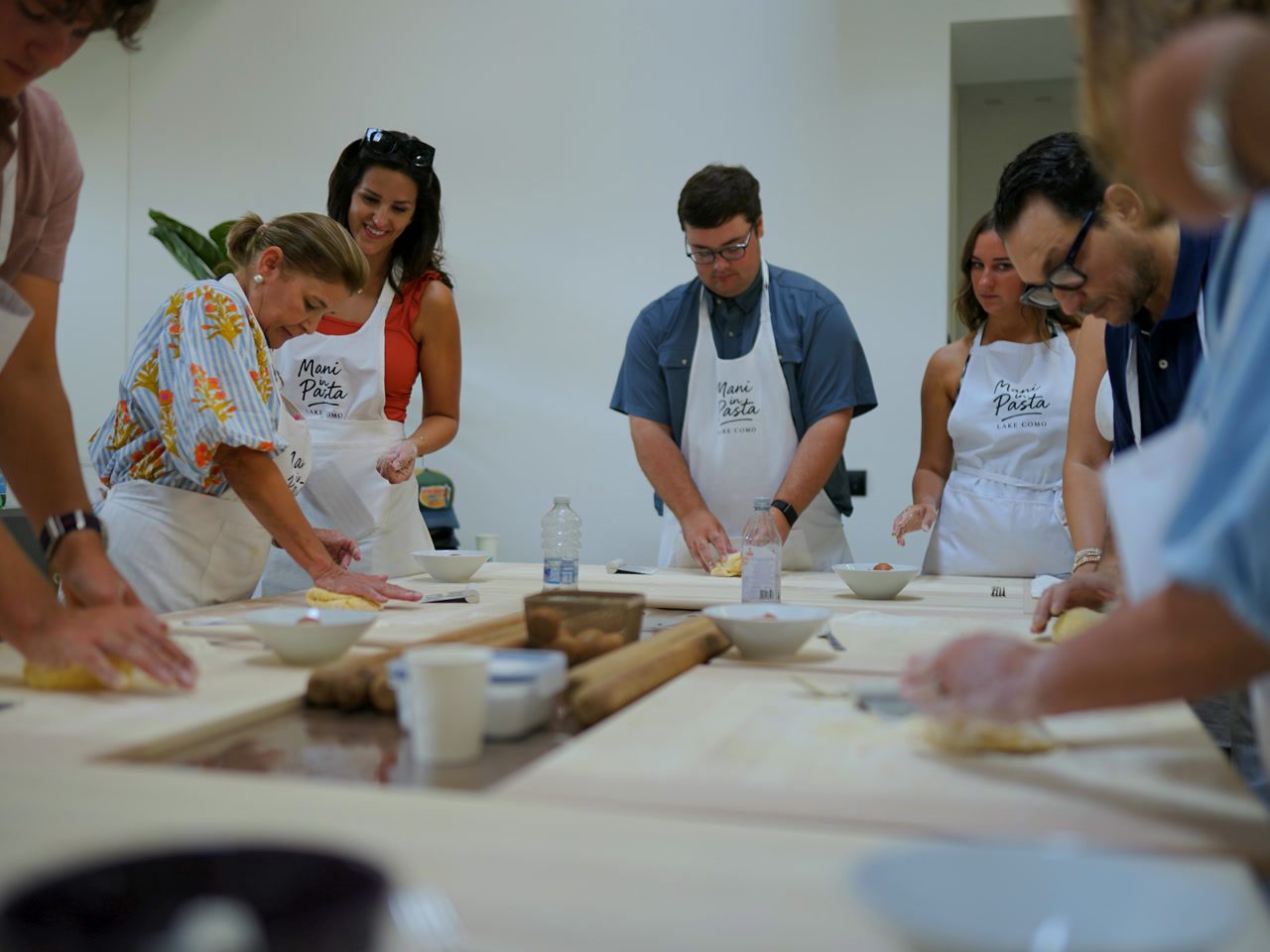
In class we describe it like Play-Doh (or DAS): soft, compact, not wet, not crumbly. Pasta is creative. A dough that is too hard limits everything you can shape.
Fold and press (don’t flatten)
Don’t press it into a flat slab. Always fold, press, and form a small block. This builds structure and activates gluten in a controlled way.
Why this matters for ravioli
If you fold badly or over-flour and then roll, ravioli edges crack. It also changes cooking time. Consistency gives you predictable results.
Key takeaways
- Egg size and humidity change the dough.
- Add flour slowly. Stop when it feels right.
- Aim for Play-Doh: soft, workable, compact.
- Fold and press to build structure.
Related articles
Learn the feel in class in Como
Hard to teach in words. Easy to learn with your hands.
Book a class Back to Journal