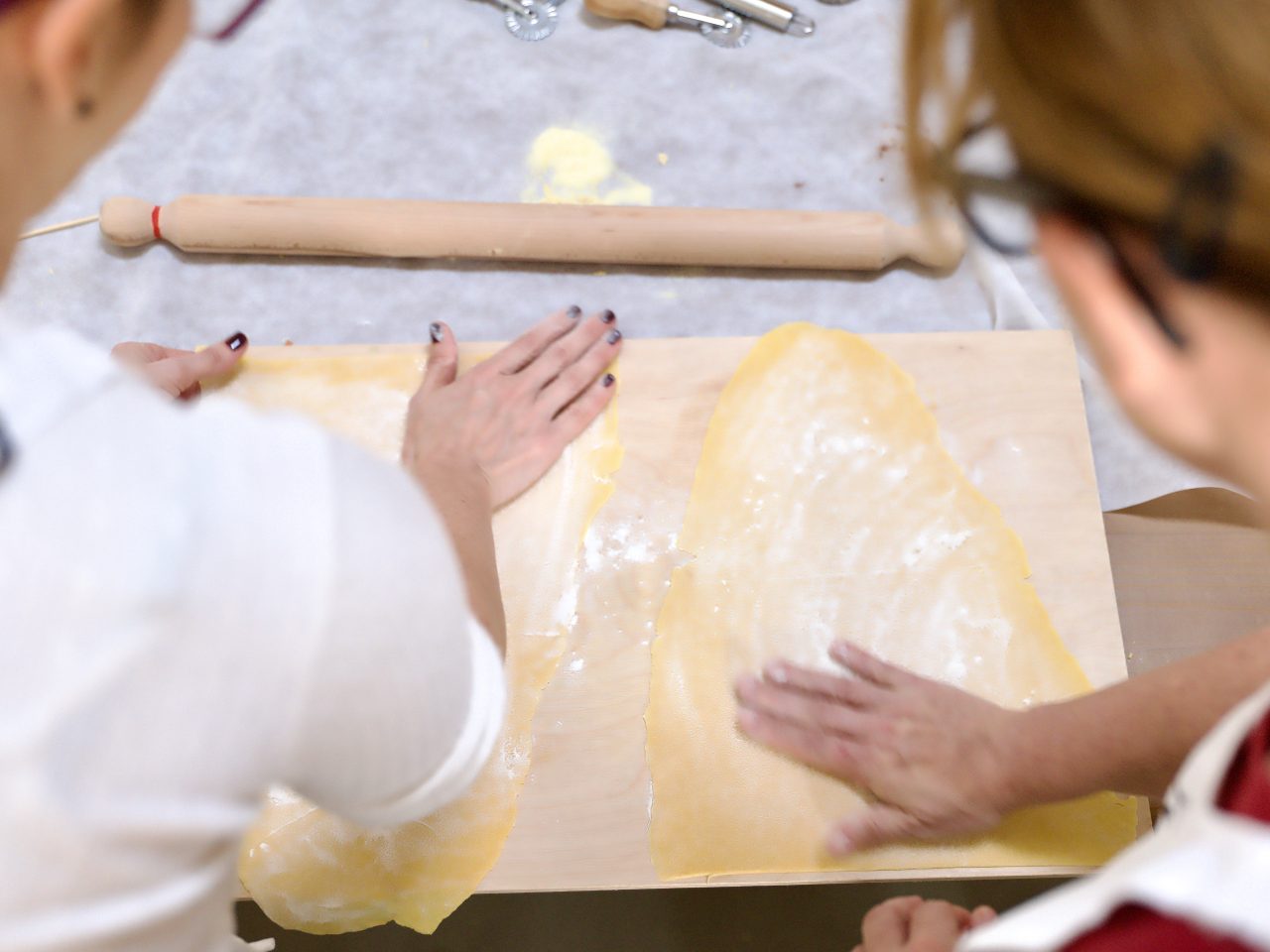
Rolling Pasta by Hand vs Machine: Thickness, Gluten, and Timing
Rolling is not just “making it thin”. Thickness decides cooking time, bite, and how well you can shape ravioli. The rolling method changes the dough you need.

Hand rolling needs a softer dough
When you roll by hand, your arms do the work. A dough that is too firm becomes a fight. In class we keep it softer so it stretches without tearing.
Machine rolling can handle firmer dough
A pasta machine forces the sheet thinner step by step. That means it can “save” a firmer dough, but the texture can become less forgiving for ravioli.
Thickness rules (simple)
Tagliatelle: slightly thicker for a clean bite. Ravioli: thinner, almost like paper, so the seam closes without bulky edges.
Gluten and resting
After mixing, the dough is elastic and pulls back. Resting relaxes it. This makes rolling smoother and prevents uneven thickness.
Want to go deeper? We weigh up the two methods in our guide to hand-rolled vs machine pasta, with the trade-offs for anyone booking a class in Como.
Key takeaways
- Hand rolling = softer dough, easier stretch.
- Machine rolling = can tolerate firmer dough.
- Thickness changes cooking time and structure.
- Resting dough improves rolling consistency.
Related articles
Roll pasta with us in Como
We correct thickness in real time, so you leave with the right feel in your hands.
Book a class Back to Journal