Ravioli That Don’t Burst: Folding, Sealing, and the “Pinkies” Trick
Ravioli fail for two reasons: weak dough structure and poor sealing. Fix both and your ravioli stay intact, cook evenly, and keep the filling inside.
Structure starts before you roll
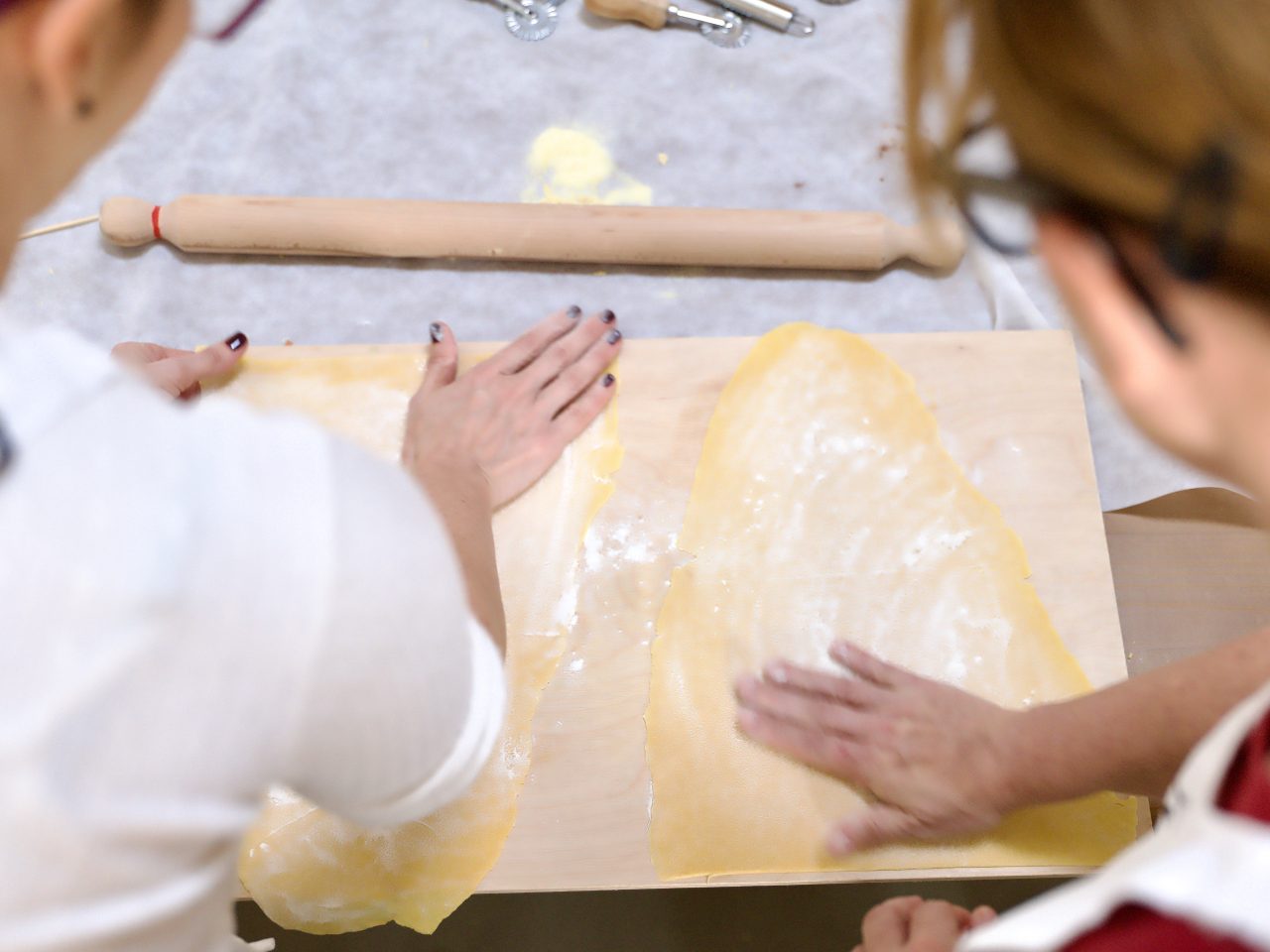
The dough is built with folding and pressing, not flattening. If you fold and then roll properly, the pasta sheet stretches without cracking.
Seal with a small amount of water
Water is glue. Use a finger (or a brush) and apply only on the edges. Too much water makes the sheet sticky, weak, and messy on the board.
Roll the dough over the filling
Close from the centre out, pushing air away. Air pockets expand in boiling water and can open the seam.
“Pinkies are your best friend”
Press close to the filling with your pinkies. This tight seal is what stops the raviolo from opening. The final edge should meet cleanly, with no wet puddles and no flour trapped inside.
Thickness matters
Tagliatelle can be slightly thicker for a proper bite. Ravioli sheets must be thinner, almost like paper. You should see your hand through the pasta (sfoglia).
Want to seal your own ravioli with us? We teach this technique step by step in the Ravioloni Verdi Masterclass – Ricotta.
Key takeaways
- Build structure by folding and pressing.
- Use minimal water on edges only.
- Close from the centre to remove air.
- Use pinkies to seal close to the filling.
Related articles
Make ravioli with us in Como
We guide your hands: thickness, filling, sealing, and the final shape.
Book a class Back to Journal