Potato Gnocchi: The Science of a Light Dough
A good gnocco is a cloud that tastes of potato; a bad one is a rubber stopper. The difference is not a family secret: it is water, starch and flour, handled with a light touch. In our cooking classes in Como we do it together; here is the same lesson, the way a precise grandmother would give it.
The right potatoes: floury, boiled in their skins
It all starts at the market. You want floury, white-fleshed potatoes, ideally a few weeks old: more starch, less water. New potatoes, so good roasted, are the enemy here — they are full of water, and every extra drop of water will be paid for in flour. Boil them whole, in their skins, starting from cold water: the skin works as a raincoat, so the potato cooks without drinking. They are done when a fork slides in without effort, not when they fall apart.
Riced while warm, never blended
Peel the potatoes as soon as you can hold them and pass them through a potato ricer, straight onto the board, in a thin layer: the steam escapes and the dough starts out drier. Warm, not cold: a cold potato turns sticky and drinks flour unevenly. And never, ever the blender — the blades burst the cells, the starch floods out all at once, and you end up with wallpaper paste.
How much flour? Less than you think
Here is the rule worth gold: flour can be added, never taken away. Start from about 200 grams per kilo of potatoes and creep towards 300 only if the potatoes were wet. The more flour you add, the more gluten you build, the more the gnocco turns to rubber: the enemy is gum, not fragility. One small egg per kilo is the beginner’s safety net — it binds the dough and makes it a touch firmer. Trust your fingertips more than the scale: it is the same rule as the Play-Doh test we use for sfoglia.
Knead little, knead well
Once the flour is in, stop early: half a minute, just long enough for the dough to hold together. This is not bread: you do not develop it, you simply gather it. The longer you work it, the more you warm the starch and wake the gluten, and the cloud turns into an elastic band. The right dough is soft, barely tacky, and gives under your finger without fighting back.
Ropes, cutting, and the ridges that catch the sauce
Dust the board with flour — a veil, not a snowstorm — and roll the dough into ropes as thick as your thumb. Cut them into two-centimetre pieces, all the same size: they will cook at the same moment. Then the ridges: roll each piece down a gnocchi board or the tines of a fork, pressing lightly with your thumb. The ridges outside and the hollow inside are not decoration, they are plumbing: more surface, more sauce held in every bite.
The cook’s test: the gnocco that floats back up
Before you cut the whole batch, do what the grandmothers do: drop a single test gnocco into salted water at a gentle simmer. If it floats back up in one piece, carry on; if it falls apart, another veil of flour and try again. Cooking works on the same signal: a few gnocchi at a time, a gentle simmer, and when they rise, count a few more seconds and lift them out with a slotted spoon — never a colander, which crushes them. From the pot straight into the sauce, no stopovers.
Key takeaways
- Floury, older potatoes: more starch, less water.
- Boiled whole in their skins, riced while warm — never blended.
- Flour: from 200 g per kilo, added a little at a time. The enemy is gum.
- Knead for half a minute, just until it holds together.
- Thumb-thick ropes, 2 cm pieces, ridges on the gnocchi board or a fork.
- The cook’s test: one trial gnocco — if it floats back up whole, carry on.
Make them with your own hands
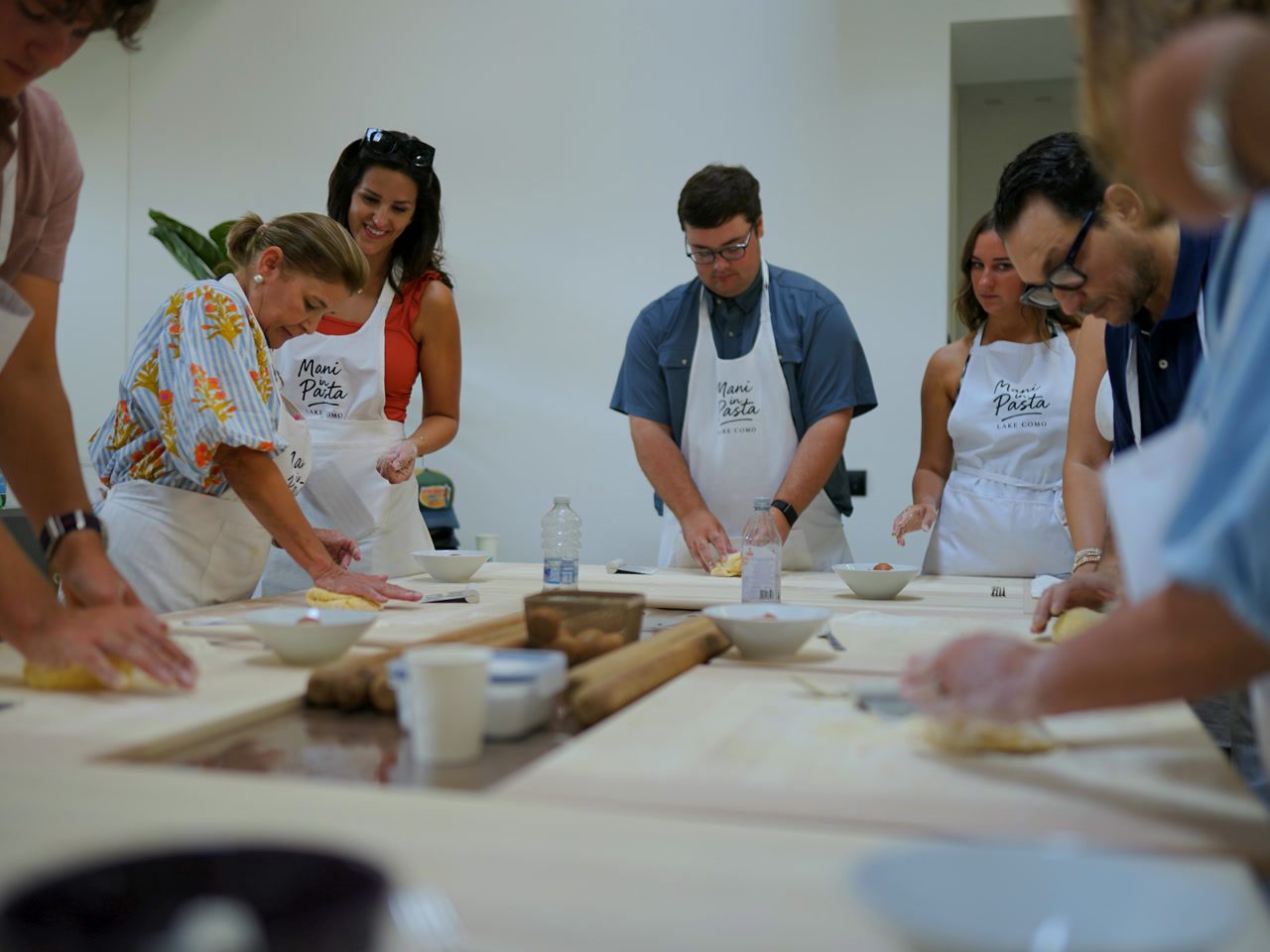
Reading is one thing; feeling the dough under your fingers is another. At the Gnocchi Masterclass you crush the potatoes while they are still warm, roll the ropes, cut and ridge your own gnocchi, then eat them at the table with the sauce you chose: fresh tomato or slow-cooked ragù bolognese.
Gnocchi Masterclass in Como
Potatoes riced while warm, ropes, cutting and ridging, then to the table: with fresh tomato from €150 per person, or with the ragù bolognese menu at €160. Includes an aperitivo with cured meats and cheeses, local wine at the table and gelato with 25-year-aged Traditional Balsamic Vinegar of Modena DOP.
Discover the Gnocchi Masterclass Back to Journal