
The History of Lake Como: A Glacial Lake, Roman Villas and the Grand Tour
Lake Como — locals simply call it the Lario — is not only one of the most beautiful lakes in the world: it is also one of the oldest and most written-about. Its water fills a valley carved by glaciers, its shores hosted the villas of the Romans, of Lombard nobles and then of Grand Tour travellers, and its pages were written by Pliny, Stendhal, Liszt and Manzoni. Before you roll the sfoglia with us at our cooking class in Como, it is worth knowing the story of the landscape outside the window: it will make every walk along the lakefront richer.
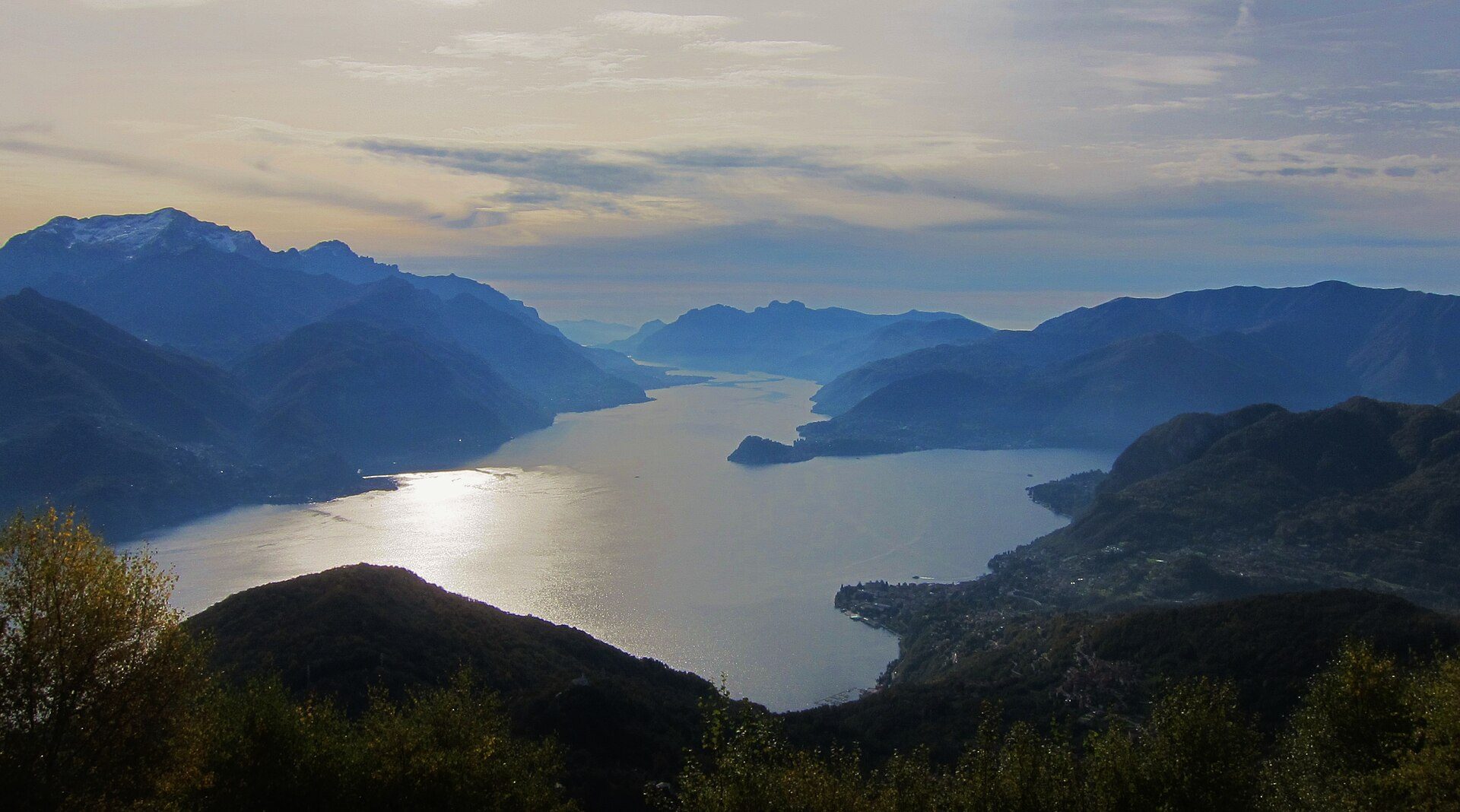
A lake born of ice
The Lario is a glacial lake. During the great ice ages, vast tongues of ice flowed down from the Alps and carved out the U-shaped valley that now holds the water; when the glaciers retreated, deposits and moraines dammed the valley and the basin filled. That is why the lake is so deep — over 400 metres at its deepest point — and so narrow, hemmed in between the mountains.
Its shape is unmistakable: an inverted Y, with two southern arms — the Como branch and the Lecco branch — that join in the north. At the centre, where the three branches meet, rises the famous Centro Lago triangle, with Bellagio on its tip. This geography is not just scenery: for centuries it decided where harbours, roads and, later, villas would stand.
The villas of the Romans
The Lario was already a holiday retreat in Roman times. The figure most tied to these shores is Pliny the Younger, a writer and senator born in Como in the first century AD. In his letters he describes two lakeside villas he affectionately called “Comedy” and “Tragedy” (Comoedia and Tragoedia): one low, on the water, where you could almost fish from the window; the other high, clinging to the hillside, with the view opening over the lake. They may be the first documented “lake-view villas” in history.
His uncle, Pliny the Elder, the naturalist who wrote the Naturalis Historia, was also from Como. The city keeps the memory of both: their statues watch over the façade of Como’s Duomo, a rare case of two pagan authors honoured on a cathedral.
The great age of villas
The lake’s truly romantic face, though, was born between the seventeenth and nineteenth centuries, when Milanese and Lombard nobility built a necklace of villas with Italian and English gardens along the shores. They became the symbol of the Lario:
- Villa del Balbianello (Lenno) — on a promontory, with the most photographed loggia and terraces on the lake.
- Villa Carlotta (Tremezzo) — famous for its botanical garden, azaleas and rhododendrons in spring.
- Villa Melzi (Bellagio) — with its English-style park stretched out over the water.
- Villa d’Este (Cernobbio) — today a luxury hotel, once a Renaissance cardinal’s residence.
These villas were not mere country houses: they were stages for parties, music and conversation, drawing artists and crowned heads from all over Europe to the lake.
The Grand Tour and the Romantics
In the eighteenth and nineteenth centuries, Lake Como became an almost obligatory stop on the Grand Tour, the long formative journey that young European aristocrats made through Italy. Writers and musicians fell in love with it: Stendhal called it a place of heartbreaking beauty; Franz Liszt stayed here with Marie d’Agoult, and it was here that their daughter Cosima was born; the poet Percy Bysshe Shelley was enchanted by it. The shores of the Lario became a byword for the Romantic landscape, suspended between mountains and water.
For Italians, however, the lake belongs above all to one other author: Alessandro Manzoni, who set the opening of his novel The Betrothed (I Promessi Sposi) precisely “on that branch of Lake Como” — the Lecco branch. Its famous opening line is one of the best known in Italian literature, and it tied the Lario forever to the written page.
From the Grand Tour to the film set
The story did not end with the Romantics. Over the last century, Lake Como has become one of the most sought-after film locations: its villas and gardens have appeared in international productions, and the area is today a destination loved by artists, directors and travellers from around the world. Yet behind the postcard façades, the fishing villages, the markets and the home kitchens remain — the lake lived in, not just admired.
To see this history with your own eyes, take a look at our day in Bellagio from Como, the heart of the Centro Lago and the villas, or our weekend in Como to put together the lake, the boats and the table.
Key takeaways
- Lake Como (the Lario) is a glacial lake shaped like an inverted Y, over 400 m deep.
- Pliny the Younger had two villas here, “Comedy” and “Tragedy”; the statues of both Plinys stand on Como’s Duomo.
- Between the 1600s and 1800s the great villas arose: Balbianello, Carlotta, Melzi, d’Este.
- The Grand Tour brought Stendhal, Liszt and Shelley; Manzoni set The Betrothed on the lake.
- Today the Lario is a beloved destination and a film location of international fame.
Cook the lake’s history with us
The best way to step into this culture is not only to look at it, but to make it. In our class you learn to roll the sfoglia by hand as it has been done for generations in these valleys, with the resident chef trained at Rina Poletti’s Accademia della Sfoglia. Choose your masterclass: Tagliatelle – Fresh Tomato, Tagliatelle – Ragù Bolognese, Ravioloni Verdi – Ricotta or Farfalle e Garganelli – Ragù. The evening closes the way tradition wants it to: a spritz lesson where you build your own Aperol or Campari spritz and enjoy it as your aperitivo, the meal with wine, and gelato topped with a few drops of Traditional Balsamic of Modena DOP. All the practical details are on our how it works page and in our pasta school in Como.
Book a cooking class on Lake Como
€150 per person, ~3 hours, groups of up to 12: hand-rolled pasta, a spritz lesson and gelato with balsamic vinegar, a short walk from Como’s historic centre.
Book a class Back to Journal