Risotto, Missoltini and Polenta: The Traditional Dishes of Lake Como
Say “Italian food” and most people picture pasta — yet the cooking of the Lario, as locals call Lake Como, grew out of water and mountain long before it grew out of the sfoglia. It is a poor, precise cuisine: lake fish salted and dried in the sun, slow polentas enriched with butter and cheese, and dairy cheeses that smell of the high pastures. This is a guide to the real traditional dishes of Lake Como — what they are, where the tradition comes from, and how, in the end, they connect to the same patient, hand-made gesture we teach in our cooking class in Como: rolling pasta by hand.

Missoltini: lake fish dried in the sun
The most distinctive dish of the lake is also its humblest. Missoltini (in dialect missoltitt) are agoni — small lake fish of the herring family, shad — that are salted and dried in the sun, then pressed in layers inside traditional tins called missolte, perfumed with bay leaves. It is a preservation technique born when the abundant catch of spring had to last the whole year, with no refrigeration.
Once cured, missoltini are warmed on the grill or in a pan, dressed with a little oil and vinegar, and traditionally served with polenta. The flavour is intense, savoury, unapologetic: this is not a dish for distracted tourists, but the heart of Lario cooking. To try them, look for the historic trattorias in the lakeside villages and the osterie that cook from the territory — always ask whether they have them, since they are seasonal and tied to the catch.
Polenta uncia (and the toc)
Here polenta is no mere side dish. The most beloved version of these valleys is polenta uncia (or polenta taragna in nearby variants): cornmeal polenta — often with a measure of buckwheat — enriched with generous butter, melted cheese and garlic. It is the food of cold days, dense and comforting, made to give warmth and calories to people who worked in the mountains.
Then there is the toc, more ritual than recipe: a soft, creamy polenta dressed with butter and cheese, traditionally eaten by everyone together from the same wooden board, each from their own side, with a glass of red wine. Proof that, on the lake, food has always been a matter of community too.
- Missoltini — agoni (shad) salted and sun-dried, warmed and served with polenta.
- Polenta uncia — cornmeal (sometimes with buckwheat) with butter, cheese and garlic.
- Toc — creamy polenta shared from the board, with red wine.
- Lavarello (whitefish) — another prized lake fish, often soused (in carpione) or grilled.
Cheeses of the territory: zincarlin and sèmuda
The mountains above the lake give cheeses that speak of the high pastures. Zincarlin is a fresh, soft, spiced cheese typical of the Valle di Muggio (straddling the Como area and the neighbouring Swiss Ticino): it is shaped into a cone, seasoned with pepper and aged while being oiled by hand, until it turns intense and almost piquant. Sèmuda, by contrast, is a cow’s-milk table cheese from the Lario tradition, with a sweeter, gentler paste.
Alongside these sit the Lombard classics that often end up in the polenta or in lake dishes. To taste them at their best, seek out the dairies and local-produce shops in town and in the villages, or the market stalls: ask what is locally made and always check seasonality and provenance with the seller.
Where (and how) to taste the tradition
Lario cooking lives in the trattorias and osterie of the lakeside villages and the inland valleys far more than in the tourist spots along the waterfront. Look for places that write the menu by hand, that change with the seasons, and that serve polenta, lake fish and missoltini: those are the signs of real cooking. Before you go, check recent reviews and current opening hours, since many historic trattorias keep their own days off. For a food-focused day in town we have gathered ideas in our things to do in Como for food lovers, while an overview of the local dishes to try in Como helps you order with confidence.
From lake to rolling pin: pasta by hand
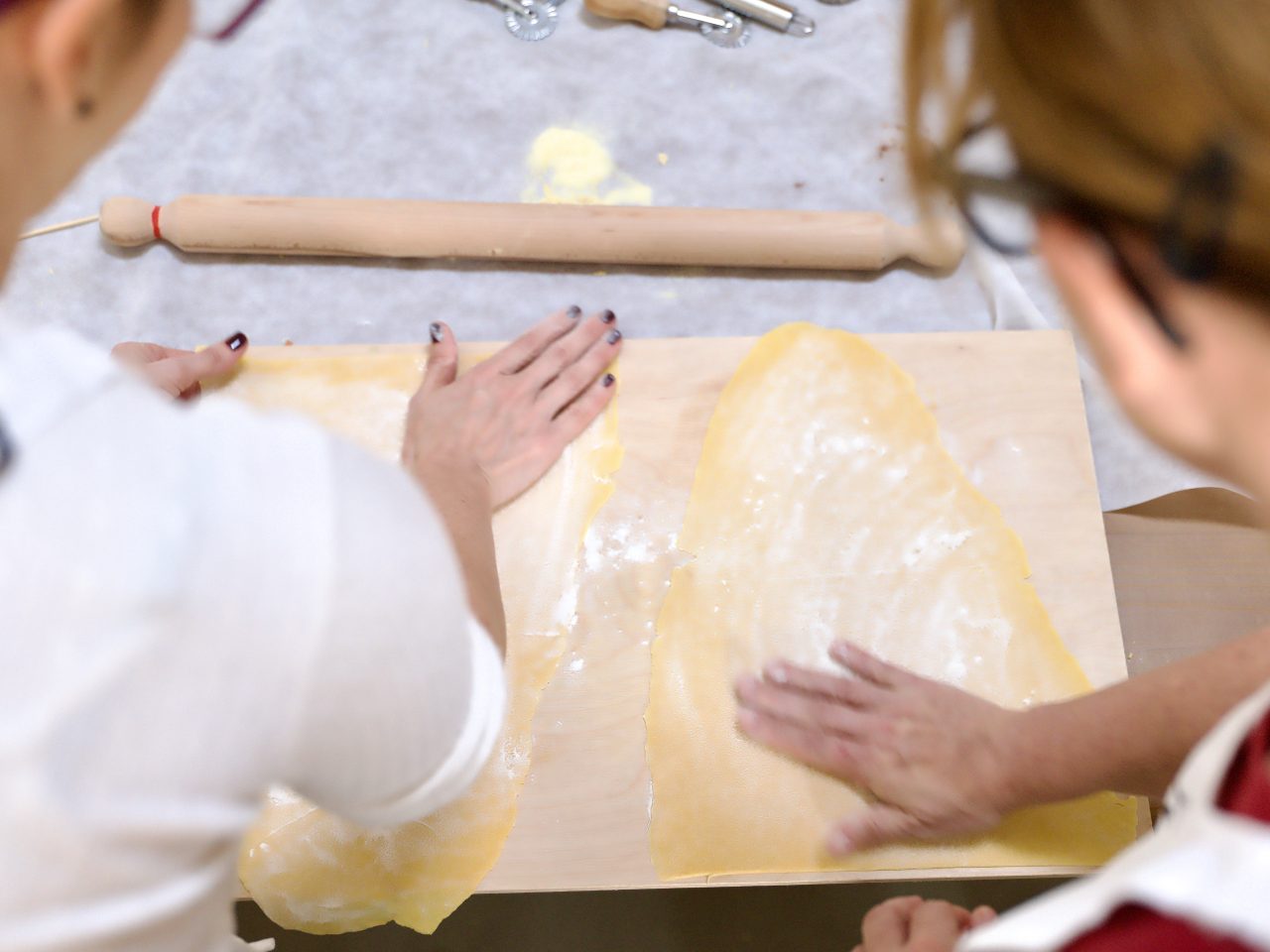
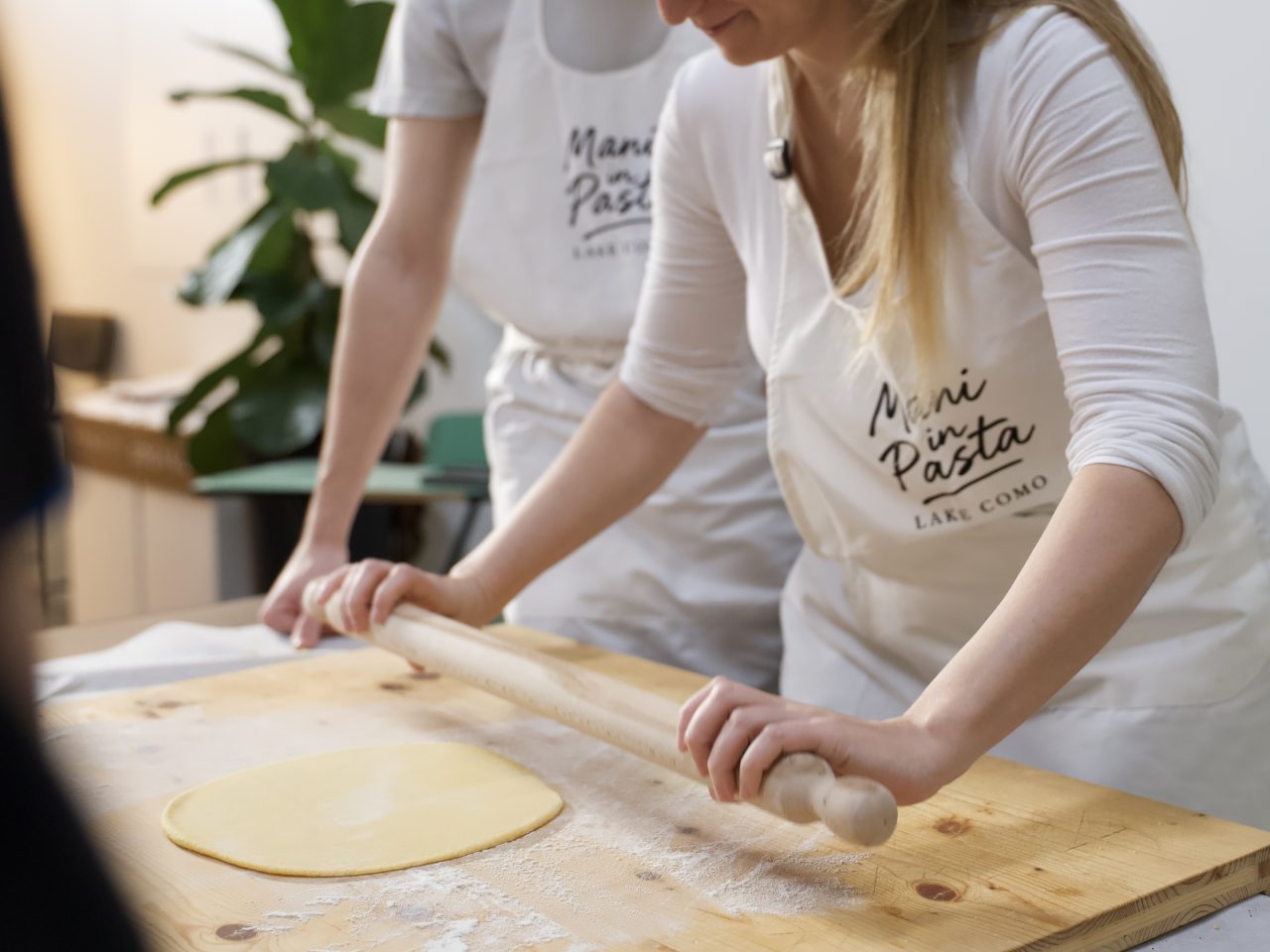
One thread runs through missoltini, polenta and cheese: each is born of a manual, patient gesture made of time and hands. Fresh pasta rolled by hand belongs to the same family. It is not a lake dish in the strict sense, but it is the most universal of Italian traditions — and the one you can genuinely learn in a few hours. Our resident chef trained at Rina Poletti’s Accademia della Sfoglia, and in the class he teaches you to roll the sfoglia with a rolling pin, no machine.
The class runs about 3 hours, in small groups of up to 12, a short walk from Como’s historic centre, and includes an aperitivo with cured meats and cheeses, the meal you cook with local wine at the table (one bottle for every four guests) and, for dessert, gelato topped with a few drops of 25-year-aged Traditional Balsamic Vinegar of Modena DOP. You choose the menu you want: from tagliatelle with fresh tomato to tagliatelle with ragù Bolognese, from hand-shaped gnocchi to green ravioloni with ricotta, from farfalle and garganelli to saffron risotto.
Key takeaways
- Missoltini are agoni (shad) salted and sun-dried, served with polenta.
- Polenta uncia and the toc are the lake’s polentas, with butter and cheese.
- Among the cheeses: zincarlin (spiced, from the Valle di Muggio) and sèmuda (gentle, table).
- Always check seasonality, opening hours and recent reviews of local eateries.
- Hand-made pasta is the tradition you can learn in person, in a 3-hour class.
Learn a gesture of the territory
Tasting the lake’s dishes is only half the journey; the other half is making one with your own hands. See how it works, read the FAQ, or give the experience with a gift voucher. To understand our teaching philosophy, take a look at the pasta school in Como.
Book a cooking class in Como
From €130 per person, ~3 hours, groups of up to 12: hand-rolled pasta or risotto, a board of cured meats and cheeses for the aperitivo and, for dessert, gelato with 25-year-aged Traditional Balsamic Vinegar of Modena DOP. A short walk from the centre.
Book a class Back to Journal